Wider location
This view places the station in its surrounding district, coast or industrial corridor.
Approx. coordinate used: 54.422, -3.4975
Adjust the page to suit you. Your choices are remembered.
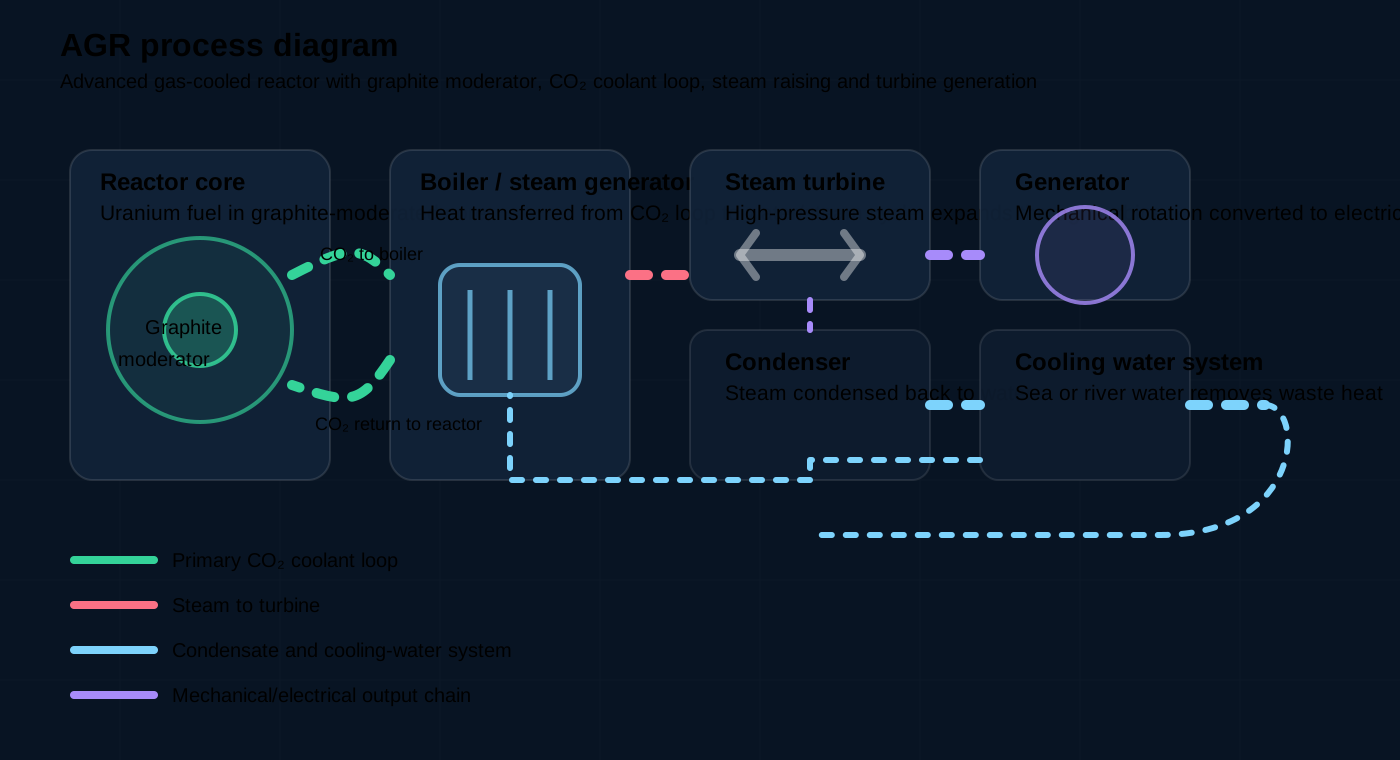
The Windscale Advanced Gas-cooled Reactor was the prototype for Britain’s later commercial AGR fleet. It generated electricity from 1962 to 1981 and subsequently became a major demonstration project for reactor dismantling.
 Sellafield Ltd

OpenStreetMap view showing the actual atlas coordinate for Windscale WAGR, with a wider local view and a closer site-focused view.
This view places the station in its surrounding district, coast or industrial corridor.
This tighter map makes the specific site position much clearer for the station record.
This summary focuses on the key facts that explain the station’s role in the wider UK generation system.
These timeline entries highlight the main milestones for the site, including commissioning, major changes, closure and current status where relevant.
WAGR entered operation as Britain’s prototype advanced gas-cooled electricity-generating reactor.
The prototype reactor shut down after establishing experience used by the later commercial AGR programme.
WAGR became a nationally important demonstration of remote reactor dismantling and waste packaging.
Power-station siting reflects engineering requirements, fuel and water logistics, grid access, industrial geography and the planning frameworks of the period in which the site was developed. Windscale WAGR should therefore be read as part of a wider infrastructure system rather than as an isolated structure in the landscape.
These notes highlight the main structures, layout characteristics and historic changes associated with the station. They are intended as a concise interpretive layer alongside the reference data, timeline and technical diagrams.
WAGR provided the engineering bridge between early Magnox reactors and Britain’s larger commercial AGR stations.
The reactor stood within the wider Windscale and Sellafield nuclear complex near Calder Hall.
Its dismantling programme developed techniques and waste packages later relevant to the wider graphite-reactor estate.
This record can be expanded further with licensed site plans, archival photography, demolition or redevelopment updates, fuller unit-level timelines and linked planning or environmental documentation.